
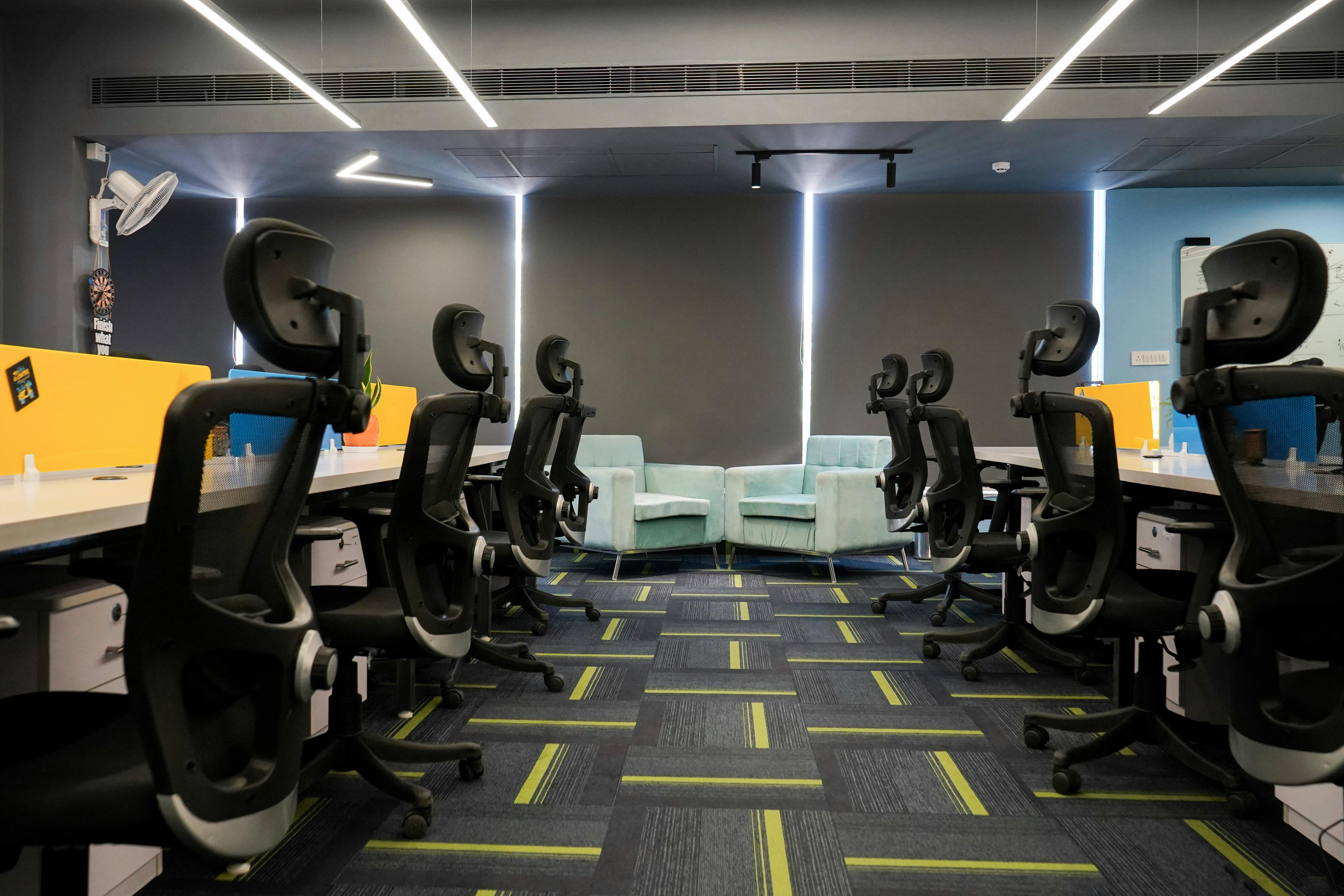
The hum of the office, the daily commute, the water cooler gossip – it all feels like a relic from another era, doesn't it? What started as a forced experiment has exploded into a full-blown revolution, fundamentally reshaping how we live, work, and dream. This isn't just about working from home; it's about reclaiming our time, redefining success, and sparking the biggest lifestyle shift in a generation. Are you ready to seize the unparalleled opportunities this new world offers, or will you be left behind in the ghost town of yesterday's corporate campus?
🔥 What's Happening Right Now
The seismic shift we're witnessing isn't merely a temporary adjustment to a global health crisis; it's a permanent paradigm change, a societal awakening to a more flexible, autonomous way of life. For decades, the 9-to-5, office-centric model was the unquestioned norm, an invisible cage dictating our daily routines, our geographic locations, and even our personal aspirations. But the dam has broken. Millions of Americans, once tethered to cubicles and congested commutes, have tasted the intoxicating freedom of remote work, and there's simply no going back.
This isn't just a trend; it's a re-evaluation of priorities on an unprecedented scale. The "Great Resignation" was mislabeled; it was, in fact, the "Great Re-evaluation." People aren't just quitting jobs; they're quitting lifestyles that no longer serve them. They're trading soul-crushing commutes for morning workouts, fluorescent lights for natural sunshine, and rigid schedules for the flexibility to attend a child's school play or care for an aging parent without guilt. This newfound autonomy isn't a luxury; it's increasingly seen as a fundamental human right in the modern workforce.
The evidence is everywhere. Suburban towns and smaller cities across the US are experiencing a renaissance as urban dwellers, freed from the need to live near their workplaces, seek more affordable housing, better schools, and a higher quality of life. This phenomenon, often termed "geographic arbitrage," allows individuals to maintain their big-city salaries while drastically reducing their cost of living, thereby accelerating their path to financial independence. Meanwhile, the once-bustling commercial districts of major metropolitan areas are grappling with unprecedented vacancy rates, transforming glittering skyscrapers into potential relics of a bygone era.
The impact extends far beyond individual choices. Entire industries are being born or rapidly evolving to support this new distributed workforce. From sophisticated remote collaboration software to ergonomic home office furniture, from virtual event platforms to cybersecurity solutions tailored for dispersed teams, innovation is booming. The "digital nomad" lifestyle, once a niche pursuit for a daring few, is now a viable and attractive option for a growing segment of professionals and entrepreneurs, blurring the lines between work, travel, and personal exploration.
This shift isn't without its challenges. Companies are grappling with how to maintain culture, foster innovation, and ensure equitable opportunities in a hybrid or fully remote environment. Individuals face new hurdles like combating isolation, setting healthy boundaries between work and life, and ensuring their home setups are conducive to productivity and well-being. Yet, the overwhelming sentiment points to an irreversible change. The office, as we knew it, is dead, and in its place, a vibrant, complex, and infinitely more flexible world of work is taking shape, demanding adaptability and strategic thinking from everyone involved.
💡 Financial Impact
The financial ramifications of this lifestyle shift are staggering, creating both immense opportunities and significant challenges for individuals and businesses alike. On a personal level, the immediate financial gains are palpable. Americans are saving thousands annually on commuting costs – gas, public transport fares, vehicle maintenance, and parking fees. The daily ritual of buying expensive lunches and coffees has diminished, replaced by home-cooked meals and brewing your own joe. The need for an extensive, professional wardrobe has lessened, cutting down on clothing expenses. These seemingly small savings accumulate rapidly, freeing up disposable income for investments, debt reduction, or pursuing personal passions.
More profoundly, the ability to relocate has unlocked a treasure trove of financial benefits. By moving from high-cost urban centers like New York or San Francisco to more affordable regions in states like Texas, Florida, or the Midwest, individuals can drastically reduce their housing costs – often their single largest expense. This can mean purchasing a larger home for the same price as a small apartment, significantly lowering mortgage payments, or even becoming homeowners for the first time. This geographic arbitrage empowers individuals to build equity faster, achieve greater financial stability, and accelerate their retirement timelines. The local economies of these receiving communities are experiencing booms, with increased demand for housing, services, and local businesses.
For small and medium-sized enterprises (SMEs), the financial impact is equally transformative. The most immediate and significant saving comes from drastically reduced operational overheads. Rent, utilities, maintenance, and property taxes for traditional office spaces represented a massive fixed cost for many businesses. By embracing remote or hybrid models, companies can downsize their physical footprint, convert expensive leases into flexible co-working memberships, or eliminate office space entirely. This capital, once tied up in real estate, can now be reinvested into growth initiatives, technology upgrades, talent acquisition, or product development.
Furthermore, remote work opens up an unprecedented talent pool. Businesses are no longer restricted to hiring within a 50-mile radius of their office. They can access top talent from anywhere in the country – or even the world – often at more competitive salaries, especially when recruiting from lower cost-of-living areas. This not only enhances competitiveness but also fosters diversity and innovation within teams. The shift demands investment in new tools and strategies – robust cybersecurity, cloud infrastructure, communication platforms, and HR solutions for distributed teams – but these costs are often offset by the savings in physical infrastructure.
However, this shift also presents challenges. The commercial real estate market is facing a reckoning, with office building owners and investors grappling with declining occupancy and property values. This creates opportunities for bold entrepreneurs to acquire and repurpose these assets into residential units, mixed-use spaces, or specialized co-working hubs for the new remote workforce. For existing businesses, maintaining team cohesion and culture in a virtual environment requires deliberate investment in virtual team-building activities and leadership training. The need for robust, scalable financial solutions to navigate these changes – whether it's securing capital for new ventures, optimizing cash flow for remote operations, or financing strategic real estate conversions – has never been greater. This is where strategic financial expertise and access to appropriate funding become absolutely critical for SMEs looking to thrive in this new landscape.
💰 Best Options in Comparison
The remote work revolution has opened up a plethora of opportunities for entrepreneurs and existing SMEs looking to adapt and thrive. The key is identifying the right path and securing the necessary funding to execute your vision. Here, we compare several high-commercial-value options that leverage this lifestyle shift, detailing their pros, cons, and funding implications.
- Option 1: Launching a Fully Remote Service-Based Business
- Option 2: Investing in Remote Work Technology & Infrastructure
- Option 3: Commercial Real Estate Repurposing & Co-working Spaces
- Option 4: Local Service Businesses in "Boom Towns"
This involves creating a business that offers services (e.g., digital marketing, consulting, virtual assistance, software development, online education) entirely remotely, leveraging the global talent pool and serving clients worldwide. This is perhaps the most direct beneficiary of the remote work trend.
| Aspect | Description |
|---|---|
| Pros | Extremely low overhead (no physical office, minimal equipment). Access to a global talent pool and client base. High scalability. Flexibility for founders. Often asset-light. |
| Cons | Requires strong digital marketing and communication skills. Intense competition in some niches. Cybersecurity risks. Difficulty in building tangible assets for collateral. |
| Funding Implications | Often requires initial capital for marketing, software subscriptions, and hiring initial remote talent. Suitable for startup loans, lines of credit for operational expenses, or potentially SBA loans if a strong business plan is presented. Focus on demonstrating recurring revenue potential. |
This option focuses on businesses that develop or provide essential tools and services for the remote workforce. This includes SaaS solutions for collaboration, project management, cybersecurity, HR, virtual events, or even physical products for home office optimization.
| Aspect | Description |
|---|---|
| Pros | High demand and growth potential. Recurring revenue models (subscriptions). Can achieve high valuations. Solves critical pain points for businesses and individuals. |
| Cons | High upfront R&D and marketing costs. Intense competition from established players. Requires specialized technical expertise. Rapidly evolving market demands continuous innovation. |
| Funding Implications | Often requires substantial venture capital or growth capital, especially for product development and market penetration. R&D tax credits and grants might be available. Demonstrating market fit and user acquisition is key for investors. |
With traditional office spaces emptying, there's a significant opportunity to acquire distressed commercial properties and convert them into residential units, mixed-use developments, or flexible co-working spaces catering to the new hybrid workforce or digital nomads in suburban/smaller urban areas.
| Aspect | Description |
|---|---|
| Pros | Addresses a clear market need (housing, flexible workspaces). Potential for significant asset appreciation. Can revitalize local communities. Diversifies investment portfolio. |
| Cons | High upfront capital investment. Complex regulatory hurdles (zoning, permits). Long project timelines. Risk associated with construction and renovation. Market saturation in some co-working niches. |
| Funding Implications | Requires significant commercial real estate loans, construction financing, or joint ventures. Access to bridge loans for acquisition. Strong financial projections for rental income or sales are crucial. Government incentives for urban redevelopment might be applicable. |
As populations shift from major cities to smaller, more affordable towns, there's a surge in demand for local services that cater to these new residents – from specialized retail and gourmet food shops to home improvement services, childcare, and wellness centers.
| Aspect | Description |
|---|---|
| Pros | Directly serves a growing, affluent customer base. Strong community ties. Less competition than urban markets. Can build strong brand loyalty. |
| Cons | Scalability might be limited by local population size. Dependent on continued influx of new residents. Requires strong understanding of local market needs. |
| Funding Implications | Suitable for small business loans for brick-and-mortar setup, equipment, and initial inventory. Equipment financing may be relevant. Demonstrating local market demand and competitive advantage is key. Community development financial institutions (CDFIs) may offer support. |
Each of these options presents a unique pathway to success in the post-office era. The common thread is the need for strategic planning, market insight, and, critically, the right financial backing. Understanding your chosen path's specific funding requirements and presenting a compelling case to lenders and investors is paramount. At smefundingexperts.com, we specialize in connecting ambitious entrepreneurs and evolving SMEs with the capital solutions tailored to these dynamic opportunities.
Conclusion
The reverberations of "The Office Is Dead" are shaking the foundations of our society, sparking a lifestyle shift that is both profound and permanent. This isn't a temporary blip; it's a fundamental reordering of priorities, a redefinition of what work means, and a powerful reclamation of personal autonomy. Millions of Americans have tasted the freedom of flexibility, the liberation from the daily grind, and the financial advantages of geographic arbitrage, and they are not looking back.
For individuals, this means unprecedented opportunities to optimize their finances, pursue their passions, and craft a life that truly aligns with their values. For businesses, particularly SMEs, it represents a pivotal moment to innovate, adapt, and strategically reposition themselves. The companies that embrace this shift – by optimizing remote operations, investing in distributed talent, or even repurposing traditional assets – will be the ones that not only survive but thrive, becoming the titans of the new economic landscape.
The challenges are real, from navigating new team dynamics to securing digital infrastructure, but the rewards for those who seize this moment are immense. This era demands vision, agility, and a clear understanding of the financial levers available to you. Whether you're launching a new remote venture, scaling a tech solution for the distributed workforce, or capitalizing on the changing real estate market, access to the right funding is the accelerant for your ambitions.
The future of work isn't just remote; it's empowered, flexible, and full of potential. Don't merely observe this revolution; become a leader within it. Understand the financial implications, explore the options, and secure the capital you need to build your legacy in this exciting new chapter. The office is dead, long live the future of work – and the entrepreneurs who dare to shape it.